Choosing the best process automation system suppliers in China requires more than comparing prices or product catalogs. A reliable supplier should combine engineering depth, proven field experience, secure software, and responsive after-sales support. This matters in chemical plants, food factories, water facilities, and advanced manufacturing lines, where one unstable controller can stop an entire production shift.
Roland Busch, President and CEO of Siemens, has emphasized the need “to become more sustainable, more productive, and more resilient.” His statement reflects the practical role of automation today. A capable process automation system should reduce energy waste, improve operator visibility, and support safer decisions through accurate, real-time data. It should also connect with existing PLCs, SCADA platforms, sensors, and enterprise systems without creating unnecessary complexity.
This guide examines leading Chinese suppliers through measurable criteria, including product reliability, control-system architecture, industry certifications, cybersecurity practices, integration skills, and lifecycle service. Factory testing, spare-parts availability, commissioning support, and training deserve equal attention. They often determine whether a system performs well after installation.
The ranking is not absolute. Every plant has different risks, budgets, processes, and maintenance skills. A supplier that fits a steel mill may not suit a pharmaceutical facility. That is where evaluation becomes less tidy, and more honest.
Buyers should request reference projects, technical documentation, service-response terms, and clear upgrade paths. Some marketing claims sound impressive but remain difficult to verify. Careful comparison is essential before selecting a long-term automation partner in China.
What Is a Process Automation System?
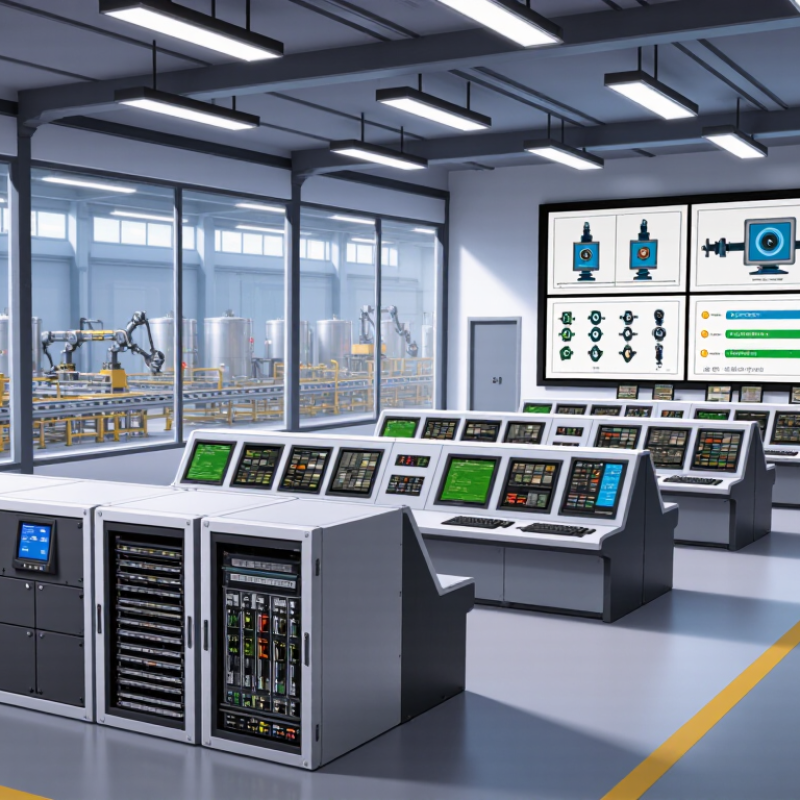
A process automation system controls industrial operations with limited manual intervention. It connects sensors, controllers, software, and field equipment. Sensors measure temperature, pressure, flow, or liquid level. Controllers compare these values with target settings. The system then adjusts valves, motors, or pumps. Operators monitor everything through visual screens in a control room. This creates faster responses and more consistent production. It also records operating data for maintenance and compliance reviews.
A reliable system needs more than advanced software. It requires clear process requirements, accurate instruments, secure communication, and trained operators. In practical engineering reviews, small details often matter. A poorly placed sensor can produce misleading readings. An unclear alarm can delay a critical response. No system is automatically intelligent. Engineers must test control sequences under normal and unusual conditions. They should also review cybersecurity, backup procedures, and future expansion. A rushed design may reduce installation time, but increase maintenance problems later.
Tips: Define measurable goals before selecting equipment. Check sensor accuracy and calibration records. Request realistic factory and site testing. Review alarm priorities with experienced operators. Keep screen layouts simple. Document every change, even small ones. Revisit the design after several months of operation. That review may reveal weaknesses missed during commissioning.

Industrial process automation depends on accurate sensing, reliable control, and clear operational data. Sensors measure pressure, temperature, flow, vibration, and liquid levels. Their signals travel through industrial networks to programmable logic controllers or distributed control systems. These controllers adjust valves, motors, heaters, and pumps within defined operating limits.
Supervisory control and data acquisition platforms display trends, alarms, and production conditions. Operators can notice a rising bearing temperature before equipment stops. Human-machine interfaces must remain simple during stressful events. Too many alarms create confusion. This problem is often underestimated.
Modern systems also use edge computing and industrial Internet of Things gateways. Edge devices process selected data near the machine, reducing delays and network traffic. Cloud platforms can support maintenance analysis, energy monitoring, and production reporting. However, poor data quality can weaken every advanced application. Digital twins may improve testing, but they still depend on accurate process models.
Cybersecurity needs protection at every layer. Secure authentication, network segmentation, encrypted communication, and regular backups reduce operational risks. Frameworks such as IEC 62443 can guide practical security planning. Controllers should also follow disciplined programming practices, including clear logic, version control, and tested changes. In real facilities, compatibility problems often appear between old instruments and new platforms. Careful site surveys and staged commissioning remain essential. No architecture is perfect. Suppliers should explain limitations, service coverage, spare-part policies, and training arrangements before installation.
Evaluating process automation system suppliers in China requires more than comparing catalog prices. Start with your process risks, production targets, and required control architecture. Ask whether the supplier has delivered similar systems for comparable temperatures, pressures, and production volumes. Request project references, not only presentation slides. A useful reference includes operating duration, maintenance records, and measurable results.
Examine engineering capability through detailed design reviews. The supplier should explain PLC or DCS selection, instrument compatibility, alarm logic, data storage, and cybersecurity controls in plain language. Review sample drawings, loop diagrams, testing procedures, and spare-parts lists. Confirm who writes the software and who owns the source code. During factory acceptance testing, test abnormal conditions, power interruptions, communication failures, and operator mistakes.
Reliability also depends on service after installation. Check the response time for remote support, local technical coverage, training quality, and inventory for critical components. Clarify warranty limits and change-order procedures before signing. Some suppliers offer impressive demonstrations but provide weak documentation afterward. That gap can create expensive delays. A careful evaluation should include at least one site visit and direct discussions with operating technicians. Do not rely entirely on certifications; they support credibility, but they do not replace evidence from real production environments. Even a strong evaluation can miss hidden integration problems, so keep contingency time and budget for commissioning adjustments.
China’s process automation suppliers usually fall into four practical groups. Control-system suppliers provide DCS, PLC, SCADA, and safety platforms. Instrumentation companies focus on pressure, flow, temperature, and level measurement. Industrial networking suppliers connect plant-floor devices with control rooms. Engineering integrators then combine these systems, configure logic, and support commissioning.
The market is substantial. MarketsandMarkets estimates the global process automation market will grow from USD 83.2 billion in 2023 to USD 106.1 billion by 2028, at a 5.0% CAGR. This growth supports Chinese suppliers serving chemicals, power, pharmaceuticals, food processing, and water treatment. In a typical plant, engineers may inspect cabinet wiring, test a pressure transmitter, and verify alarm responses before production starts. Those details matter more than a polished sales presentation.
A fifth category deserves attention: lifecycle service providers. They offer remote diagnostics, spare-parts planning, cybersecurity checks, and operator training. ARC Advisory Group has repeatedly identified service capability and system integration as important factors in automation purchasing decisions. Yet supplier categories often overlap. A controls supplier may lack strong field maintenance, while an integrator may depend on external hardware. That is an uncomfortable but useful point. Buyers should compare documented project experience, response times, migration methods, and functional-safety competence. ISO 9001 certification helps, but it does not prove every engineering decision is reliable. Production evidence still matters.
China Best Process Automation System Suppliers?
Procurement should begin with process fit, not a low initial quotation. Deloitte’s 2024 Smart Manufacturing and Operations Survey found that 86% of manufacturers expect smart manufacturing to become a major competitiveness factor within five years. Ask suppliers for a clear bill of materials, lifecycle costs, delivery milestones, and cybersecurity responsibilities. Check certifications, engineering records, and references from plants with similar temperatures, pressures, and production volumes. A cheap control cabinet can become expensive when spare modules are unavailable.
Integration deserves practical testing. Require a documented FAT before shipment, then repeat critical tests during SAT at the plant. Confirm communication with existing PLCs, historians, sensors, and safety systems. The ISA-95 framework can help define responsibilities between enterprise and control levels. Do not accept “seamless integration” without tag lists, alarm logic, network diagrams, and recovery procedures. In my experience, unclear interfaces create more delay than hardware defects. My earlier assumption was that standard protocols solve everything. They do not.
Tips: Put response times in the contract. Keep critical spares locally. Request operator training with real plant scenarios. Measure alarm performance after commissioning, not only during testing. Deloitte also reports that workforce capability remains a major barrier to smart manufacturing adoption. Therefore, after-sales support should include remote diagnostics, on-site response targets, software updates, and refresher training. Review these services quarterly. Some suppliers promise 24-hour support, but the contract may define only a response, not a repair. That difference matters.
| Evaluation Dimension | Recommended Weight | What to Evaluate | Evidence to Request During Procurement | Practical Acceptance Criteria | Key Risk if Not Verified |
|---|---|---|---|---|---|
| Application and Process Fit | 15% | Suitability for continuous, batch, or discrete process operations; number of control loops; sequence complexity; alarm, historian, and recipe requirements. | Process control narrative, cause-and-effect matrix, instrument index, input/output list, network architecture, and similar project references with sensitive details removed. | The proposed architecture covers all required control functions without relying on undocumented workarounds or excessive custom programming. | Control gaps, unstable operation, and expensive redesign after contract award. |
| Procurement Transparency | 10% | Clarity of equipment scope, software licenses, engineering hours, commissioning expenses, spare parts, taxes, logistics, and change-order rules. | Itemized commercial proposal, responsibility matrix, license schedule, delivery terms, payment milestones, exclusions, and validity period. | Hardware, software, engineering, testing, travel, training, and support costs are separately identified and contractually defined. | Unexpected fees, disputed scope, and difficulty comparing competing bids. |
| Standards and Compliance | 10% | Alignment with applicable electrical, functional-safety, industrial-network, cybersecurity, and documentation requirements. | Compliance matrix referencing applicable local regulations and internationally recognized standards, together with certificates or declarations where relevant. | Every mandatory requirement has a named compliance owner, verification method, and document deliverable. | Approval delays, unsafe modifications, or nonconforming equipment at site. |
| System Architecture and Interoperability | 10% | Support for required PLC/DCS/SCADA functions, industrial communication protocols, third-party instruments, historians, MES or ERP interfaces, and remote access controls. | Detailed network diagram, protocol list, tag-mapping example, interface specification, data-retention plan, and cybersecurity zoning concept. | Interfaces are documented, tested, and based on open or contractually defined protocols rather than undocumented proprietary dependencies. | Data silos, integration delays, and long-term dependence on one system provider. |
| Engineering and Integration Capability | 15% | Availability of controls engineers, process engineers, panel designers, software engineers, commissioning personnel, and project managers. | Project organization chart, role qualifications, engineering methodology, software development standards, schedule, resource loading, and reference project descriptions. | Named personnel and responsibilities are included in the contract, with formal change control for substitutions. | Inconsistent design quality, schedule slippage, and excessive dependence on subcontractors. |
| Factory Acceptance Testing | 8% | Completeness of simulation, I/O checks, sequence testing, alarm testing, communications testing, cybersecurity checks, and document review before shipment. | FAT procedure, test scripts, simulation philosophy, punch-list process, test records, and customer witness arrangements. | FAT entry criteria, pass/fail rules, defect closure responsibilities, and retest requirements are defined before testing begins. | Problems are discovered only during installation or production start-up. |
| Site Acceptance and Commissioning | 8% | Installation supervision, loop checks, cold commissioning, hot commissioning, performance verification, operator support, and handover responsibilities. | SAT procedure, commissioning schedule, site staffing plan, method statements, performance-test protocol, and contingency plan. | Commissioning milestones are measurable, and final acceptance is linked to documented performance results rather than attendance alone. | Production interruption, unclear handover, and unresolved commissioning defects. |
| Cybersecurity and Remote Support | 8% | Asset inventory, account management, patching policy, backup and recovery, malware protection, network segmentation, logging, and controlled remote access. | Cybersecurity plan, access-control matrix, backup procedure, vulnerability-management process, remote-support workflow, and incident-notification commitment. | Remote access is approval-based, time-limited, logged, and disabled when not required; system backups are restorable and tested. | Unauthorized access, extended outages, loss of configuration data, or difficult incident investigation. |
| Documentation and Knowledge Transfer | 6% | Quality of drawings, software backups, tag databases, manuals, maintenance instructions, network records, alarm philosophy, and operator training. | Document register, sample drawings, software deliverable list, revision-control procedure, training agenda, and language requirements. | Editable source files and current as-built documentation are delivered before final payment and stored in an agreed repository. | Slow troubleshooting, weak maintainability, and dependence on individual engineers. |
| Spare Parts and Lifecycle Planning | 5% | Availability of critical electronic modules, power supplies, communication equipment, sensors, actuators, and recommended stock levels. | Critical-spares list, lead-time statement, obsolescence policy, repair or replacement process, storage requirements, and product lifecycle notice procedure. | Critical items have defined replenishment routes and documented alternatives or migration plans where applicable. | Long production stoppages caused by unavailable or obsolete components. |
| Warranty and After-Sales Service | 8% | Warranty duration, service coverage, response times, escalation path, remote diagnostics, on-site support, defect liability, and service availability. | Warranty terms, service-level agreement, support calendar, escalation contacts, ticket workflow, exclusions, and service-rate schedule. | Severity levels, response targets, restoration targets, spare-part responsibilities, and escalation deadlines are written into the agreement. | Slow recovery, unclear accountability, and uncontrolled support costs after commissioning. |
| Total Cost of Ownership | 7% | Purchase price plus engineering, licenses, training, energy use, maintenance, spare parts, cybersecurity upkeep, upgrades, and eventual migration. | Five- to ten-year cost model, recurring-license schedule, maintenance assumptions, upgrade costs, and end-of-life obligations. | The preferred bid remains economically justified after recurring costs and operational risks are included. | Low initial price but high operating, licensing, and modernization costs. |