China Top Industrial Process Automation Suppliers

China Top Industrial Process Automation Suppliers are increasingly serving manufacturers that need stable control, measurable efficiency, and dependable technical support. This guide examines industrial process automation providers through practical, evidence-based criteria. These criteria include PLC, DCS, SCADA, motion control, instrumentation, and system integration capabilities. It also considers engineering documentation, factory testing, commissioning support, spare parts, and long-term maintenance.

Real performance appears on the plant floor.

A supplier may offer advanced controllers, yet installation quality remains critical. Cabinet wiring, network layout, alarm settings, and operator training can influence daily reliability. Strong suppliers usually provide clear drawings, testing records, cybersecurity measures, and responsive service channels. Verified certifications, relevant case studies, and compliance with recognized standards can strengthen confidence, but certificates alone cannot prove project success. Buyers should request reference projects with similar production conditions, process risks, and production volumes.

No supplier fits every facility.

Cost comparisons can also mislead when they exclude software licenses, integration changes, travel, training, or future upgrades. Some product pages sound impressive, but practical details may remain unclear. That deserves careful questioning. This overview therefore avoids treating market visibility as proof of technical superiority. Instead, it highlights suppliers that demonstrate engineering depth, transparent communication, and sustained customer support. The final choice should reflect process complexity, local service expectations, expansion plans, and the buyer’s internal expertise. A careful evaluation may take longer, but it can reduce commissioning surprises and protect operational continuity.
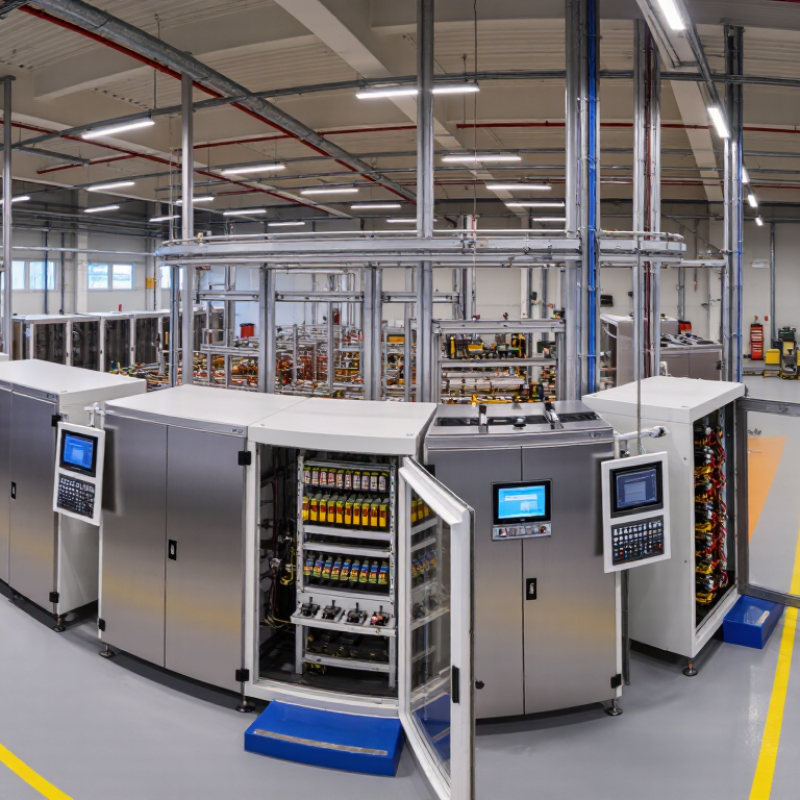
China Top Industrial Process Automation Suppliers

Definition and Scope of Industrial Process Automation Suppliers in China

China’s industrial process automation suppliers design, integrate, and maintain systems that control continuous or batch production. Their scope usually includes sensors, programmable controllers, distributed control systems, industrial networks, and safety instruments. It also covers engineering, commissioning, cybersecurity, calibration, and long-term maintenance. The boundary is not perfectly clean.

Process automation serves chemical, pharmaceutical, energy, food, metallurgy, and water-treatment facilities. A credible supplier should understand plant conditions, not only sell hardware. Engineers may review a control cabinet, test a pressure transmitter, or adjust a loop while production continues. This practical experience matters because unstable temperature or flow can damage an entire batch.

Market data shows the scale of China’s automation demand. The International Federation of Robotics reported 276,288 industrial robots installed in China during 2023, representing 51% of global installations. Robots are mainly discrete-automation equipment, but the figure indicates strong investment in connected production. MarketsandMarkets estimates that the global industrial automation market will reach approximately 265 billion US dollars by 2027. China’s suppliers increasingly combine process control with data platforms, predictive maintenance, and energy monitoring. Still, digital features do not guarantee reliability. Vendor qualification should examine documented project results, response times, spare-parts capability, and compliance with applicable standards. One weakness remains common: some suppliers describe integration ability broadly, while offering limited evidence from complex operating plants.
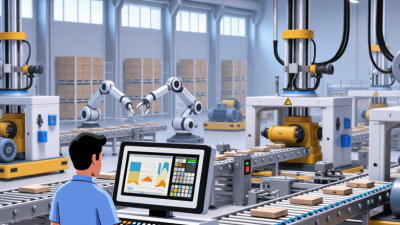
Key Technologies Offered by China’s Industrial Automation Suppliers

China Top Industrial Process Automation Suppliers

China’s industrial automation suppliers offer practical technologies for factories, utilities, and process plants. Their solutions often combine PLCs, DCS platforms, SCADA software, and industrial communication networks. These systems collect signals from pumps, valves, motors, and temperature sensors. Operators can view live data from a control room or local panel.

Motion control supports accurate movement in packaging, assembly, and material-handling equipment. Machine vision checks labels, dimensions, and surface defects with consistent lighting. Industrial robots can manage repetitive handling tasks, while edge computers process production data near the equipment. This reduces delay when fast decisions matter. However, integration quality still varies. A technically strong system may perform poorly if sensors are badly selected or workers receive limited training.

Tips: Check protocol compatibility before purchasing. Request a clear maintenance plan, spare-parts list, and cybersecurity procedure. Test alarms with real operating conditions, not only factory demonstrations. Ask suppliers to document energy use and data ownership. Small details matter.

Predictive maintenance tools analyze vibration, temperature, and motor current. They can warn technicians before a bearing failure stops production. Digital twin technology also helps engineers test process changes without disturbing live equipment. Safety controllers, emergency circuits, and access monitoring add another protection layer. Experienced buyers should review response time, calibration records, software updates, and local technical support. No system is perfect. A careful site trial often reveals problems that attractive specifications hide.

China Top Industrial Process Automation Suppliers - Key Technologies Offered by China’s Industrial Automation Suppliers
Technology Category Key Technologies and Capabilities Typical Industrial Applications Representative Technical Characteristics Relevant Standards and Protocols
Programmable Logic Controllers Modular control architecture, distributed I/O, ladder logic, function-block programming, high-speed counters, PID control, and remote diagnostics. Packaging, material handling, assembly lines, water treatment, utilities, and discrete manufacturing. Supports digital and analog I/O, deterministic scan cycles, expansion modules, industrial networking, and redundant power or controller configurations for critical systems. IEC 61131-2; IEC 61131-3; Modbus TCP; PROFINET; EtherNet/IP; OPC UA.
Distributed Control Systems Continuous process control, advanced regulatory control, alarm management, historian integration, operator graphics, and controller redundancy. Chemical processing, petrochemical production, power generation, pharmaceuticals, metallurgy, and large-scale utilities. Designed for large tag counts, continuous-loop control, centralized engineering, high system availability, sequence control, and plant-wide monitoring. IEC 61511; IEC 61508; ISA-18.2; OPC UA; Modbus TCP; HART integration.
SCADA and HMI Systems Real-time visualization, supervisory control, alarm handling, historical trends, production reporting, user access management, and remote operation. Water and wastewater networks, energy infrastructure, factories, transportation systems, building utilities, and environmental monitoring. Provides multi-user access, event and alarm logs, role-based permissions, database connectivity, web-based dashboards, and integration with PLCs, RTUs, and meters. IEC 62443; OPC UA; MQTT; Modbus RTU/TCP; DNP3; IEC 60870-5-104.
Industrial Internet of Things Edge computing, equipment connectivity, data acquisition, cloud integration, predictive maintenance, asset tracking, and production analytics. Smart factories, energy management, equipment monitoring, warehouse automation, remote service, and production optimization. Combines sensors, gateways, edge analytics, time-series databases, device management, and secure data transmission between shop-floor and enterprise systems. MQTT; OPC UA; REST API; ISO/IEC 27001; IEC 62443; IPv6; TLS encryption.
Industrial Ethernet and Fieldbus Real-time communication, network segmentation, managed switching, network redundancy, remote diagnostics, and controller-to-device integration. Production lines, process plants, motion systems, robotic cells, distributed instrumentation, and machine-to-machine communication. Supports deterministic communication, ring or redundant topologies, VLANs, time synchronization, diagnostics, and integration of controllers, drives, sensors, and safety devices. IEC 61158; IEC 61784; IEEE 802.3; PROFINET; EtherCAT; Modbus TCP; CANopen.
Variable-Frequency Drives Motor speed regulation, torque control, soft starting, energy optimization, braking control, fault monitoring, and closed-loop operation. Pumps, fans, compressors, conveyors, extruders, HVAC systems, cranes, and process machinery. Supports induction and permanent-magnet motors, variable-speed operation, overload protection, regenerative or dynamic braking options, and networked parameter management. IEC 61800 series; IEC 60364; Modbus RTU/TCP; CANopen; industrial Ethernet protocols.
Motion Control and Servo Systems Position, velocity, and torque control; electronic gearing; cam profiling; synchronized axes; interpolation; and high-speed motion coordination. CNC equipment, packaging, printing, semiconductor equipment, textile machinery, battery production, and automated assembly. Provides encoder feedback, multi-axis synchronization, high positioning repeatability, servo tuning, real-time bus communication, and coordinated motion profiles. IEC 61800-5-2; IEC 61131-3; IEC 61800-7; EtherCAT; CANopen; OPC UA integration.
Machine Vision Image acquisition, dimensional inspection, optical character recognition, barcode and matrix-code reading, defect detection, and robot guidance. Electronics inspection, packaging verification, automotive components, pharmaceutical packaging, battery manufacturing, and quality control. Uses industrial cameras, controlled lighting, lenses, image-processing algorithms, trigger synchronization, and pass/fail data communication with control systems. GigE Vision; GenICam; USB3 Vision; OPC UA; TCP/IP; industrial Ethernet.
Industrial Robotics Six-axis and parallel manipulation, palletizing, welding, assembly, dispensing, machine tending, collision monitoring, and robot-cell coordination. Automotive production, metal fabrication, logistics, electronics assembly, food processing, warehousing, and repetitive material handling. Common system elements include programmable trajectories, end-of-arm tooling, safety-rated monitoring, vision guidance, offline programming, and integrated cell control. ISO 10218; ISO/TS 15066; ISO 13849-1; IEC 60204-1; IEC 61508.
Functional Safety Systems Emergency shutdown, safety PLC control, safe motion, interlocking, light-curtain monitoring, safety relays, and risk-reduction management. Process plants, robotic cells, machine tools, conveyors, presses, packaging equipment, and hazardous production areas. Implements safety functions using monitored inputs, redundant logic, diagnostic coverage, fail-safe outputs, emergency stop circuits, and documented safety validation. IEC 61508; IEC 61511; ISO 13849-1; IEC 62061; IEC 60204-1.
Process Instrumentation Measurement of pressure, temperature, flow, level, analytical variables, and equipment condition, with signal conditioning and remote configuration. Oil and gas processing, chemical plants, water treatment, power generation, food processing, pharmaceuticals, and mineral processing. Common signal types include 4–20 mA, digital sensor communication, pulse signals, and wireless links; installations may include calibration, diagnostics, and hazardous-area provisions. IEC 60770; IEC 61511; HART; FOUNDATION Fieldbus; Modbus; IECEx and ATEX requirements where applicable.
Energy Management and Power Monitoring Electrical metering, load analysis, power-quality monitoring, demand management, energy dashboards, and equipment-level consumption tracking. Factories, data centers, commercial facilities, industrial parks, renewable-energy systems, and high-consumption process plants. Measures voltage, current, active energy, reactive energy, power factor, frequency, harmonics, and demand intervals for operational and reporting purposes. IEC 61557-12; IEC 62053; ISO 50001; Modbus RTU/TCP; IEC 61850 where applicable.
Industrial Cybersecurity Asset inventory, network segmentation, secure remote access, identity management, vulnerability monitoring, backup, incident response, and security auditing. Control rooms, production networks, substations, water infrastructure, manufacturing plants, and connected industrial assets. Security architectures commonly use zones and conduits, firewalls, least-privilege access, multifactor authentication, encrypted connections, logging, and controlled patch management. IEC 62443; ISO/IEC 27001; NIST Cybersecurity Framework; IEC 62351 for applicable power-system communications.

Major Supplier Categories Across Chinese Industrial Sectors

China’s industrial process automation suppliers span several practical categories across major sectors. Control system providers support power generation, chemicals, water treatment, and pharmaceuticals. Their solutions may include controllers, operator stations, industrial networks, and alarm management.

Instrumentation suppliers focus on pressure, flow, temperature, and level measurement. These devices are essential near pipelines, reactors, boilers, and storage tanks.

Motion-control suppliers serve machinery, packaging, textiles, and automotive production. They provide motors, drives, servos, and positioning equipment.

Safety automation suppliers add emergency shutdown systems, fire detection interfaces, and protective controls for high-risk operations.

System integrators connect these layers with SCADA, MES, energy monitoring, or production databases. The integration work is often harder than the hardware purchase.

Tips: Check references from similar industries. Ask for test records, calibration methods, spare-part plans, and cybersecurity controls. Request a small pilot before expanding. Measure response time on a real production line. Do not judge suppliers only by catalog size. A polished demonstration can hide weak maintenance support. I have seen technically strong projects struggle because operators received poor training. That detail deserves more attention. Supplier evaluation should also consider documentation quality, local service coverage, data compatibility, and compliance with applicable industrial standards. No shortlist is perfect. Review it again after site testing.

Evaluation Criteria for Selecting a Chinese Automation Supplier

China Top Industrial Process Automation Suppliers

Selecting a Chinese automation supplier requires more than comparing quotations. Application fit comes first: process stability, response time, environmental conditions, and maintenance access must match the plant. The International Federation of Robotics reported 276,288 industrial robot installations in China during 2023, representing about 51% of global installations. This scale shows strong manufacturing capability, but it does not guarantee project suitability.

Ask for evidence. Require a detailed functional specification, control architecture, cybersecurity procedures, and documented factory and site acceptance tests. Suppliers should explain how controllers, drives, sensors, and supervisory systems communicate during faults. IEC 62443-based practices are useful for evaluating industrial cybersecurity. Deloitte’s 2024 smart manufacturing research found that 86% of manufacturers expect smart manufacturing to remain important for competitiveness within five years. Integration skills therefore deserve the same attention as hardware pricing.

Look beyond the first invoice. Compare total cost across commissioning, training, spare parts, software updates, and emergency support. Request references from plants with similar temperatures, production cycles, and compliance requirements. A live demonstration is valuable. Watch an operator change a recipe, isolate a fault, and recover production. Small details reveal maturity. A cheap proposal may hide engineering assumptions; I have learned that unclear assumptions become expensive change orders. Even experienced buyers can miss this. Leave room for review. Perform a technical clarification meeting before contract award, and record every unresolved point in the purchase specification.

China Top Industrial Process Automation Suppliers - Evaluation Criteria for Selecting a Chinese Automation Supplier

This practical procurement framework assigns a 100% evaluation weight across the factors most relevant to industrial process automation projects. Technical capability, quality compliance, and delivery reliability receive the highest weighting because they directly affect system performance, project risk, and production continuity.

Market Trends Shaping China’s Industrial Process Automation Industry

China Top Industrial Process Automation Suppliers
Market Trends Shaping China’s Industrial Process Automation Industry

China’s industrial process automation market is moving from isolated control systems toward connected, data-driven operations. Manufacturers are upgrading factories with edge computing, industrial networks, and real-time production dashboards. In chemical, food, and energy facilities, sensors now track temperature, pressure, flow, and equipment vibration continuously. These details help engineers detect abnormal conditions before production losses become serious.

Energy efficiency is becoming a stronger purchasing factor. Automation projects increasingly measure electricity, steam, compressed air, and water consumption at equipment level. Carbon reporting and stricter efficiency targets are influencing system design. However, many older plants still use fragmented controllers and incomplete records. Retrofitting them is practical, but integration often takes longer than planned. Data quality remains a quiet obstacle.

Artificial intelligence is entering predictive maintenance, process optimization, and quality inspection. Yet reliable results require clean historical data and experienced operators. A model may flag a harmless vibration or miss a rare failure. Human review still matters. Cybersecurity is also gaining attention through network segmentation, access control, backup testing, and supplier risk checks. The strongest projects combine local engineering knowledge with international safety practices, clear documentation, and measurable performance targets. Progress is real, but not always smooth.