
China Top 10 Process Control Automation Manufacturers: An Introduction
China’s process control automation industry is changing quickly. Local manufacturers now supply distributed control systems, programmable logic controllers, industrial software, sensors, and safety solutions. Their products support chemical plants, power stations, water facilities, food production, and advanced manufacturing lines.
This overview examines ten leading manufacturers through practical criteria. These include control accuracy, system stability, communication protocols, cybersecurity, engineering support, and lifecycle service. Factory experience matters. A controller may look impressive in a brochure, yet perform poorly beside heat, vibration, dust, or unstable networks. Reliable suppliers usually provide clear documentation, tested components, responsive technicians, and upgrade paths that protect existing investments.
Quality expert W. Edwards Deming offered a useful warning: “A bad system will beat a good person every time.” His principle remains relevant to process control automation. Strong operators cannot permanently compensate for weak architecture, unclear alarms, or poorly maintained instruments. Good automation should reduce uncertainty while keeping human judgment visible.
The manufacturers discussed here differ in scale, specialization, and international reach. Some focus on large industrial control platforms. Others excel in motion control, instrumentation, or compact automation packages. Their strengths are not identical.
No ranking is permanent. Market evidence can be incomplete. Product performance also depends on engineering design, installation quality, and operator training. Buyers should verify certifications, local support, spare-part availability, and real reference projects before making a decision. In practice, the best supplier is not always the largest one. It is the one that fits the process, people, budget, and future expansion plan.
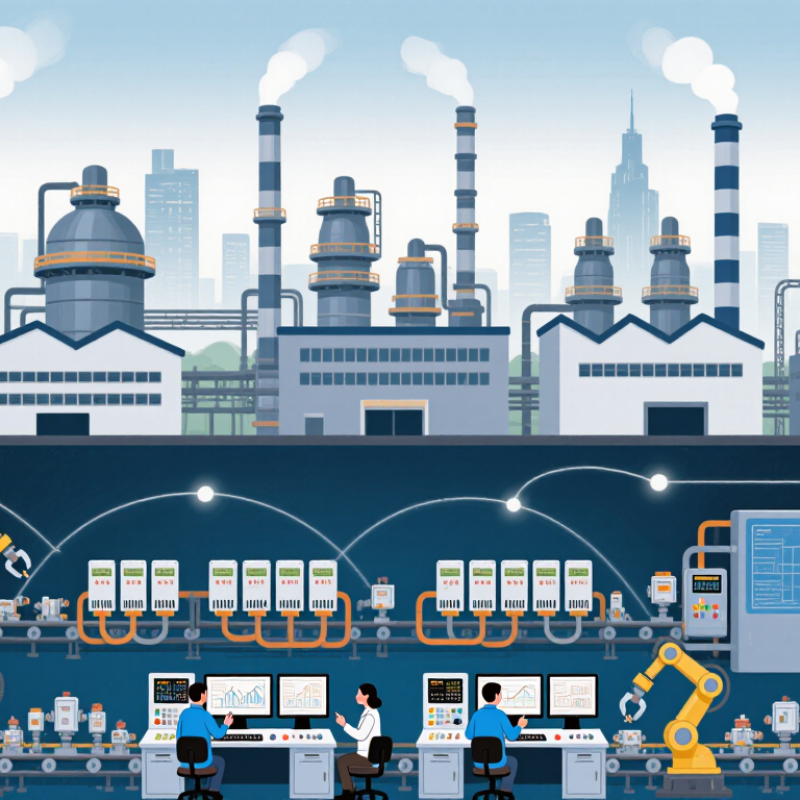
China’s process control automation sector serves chemicals, power generation, pharmaceuticals, food processing, and advanced manufacturing. Its scope includes distributed control systems, programmable controllers, industrial networks, sensors, safety systems, and plant-level analytics. The market is moving from isolated equipment toward connected production lines. However, adoption differs sharply between coastal factories and smaller inland plants.
The International Federation of Robotics reported
276,288
industrial robot installations in China during 2023. That represented about 51% of global installations. This figure shows strong automation demand, although robot deployment is not the same as process-control maturity. A chemical facility may still rely on aging control cabinets, manual calibration, and fragmented data. That gap deserves more attention.
Industry growth is also supported by China’s large manufacturing base. The National Bureau of Statistics reported that manufacturing remained a major contributor to industrial output in recent years, while high-tech manufacturing expanded faster than many traditional sectors. Professional market studies from MarketsandMarkets and ARC Advisory Group identify digital control, predictive maintenance, cybersecurity, and energy management as important investment areas.
In practice, engineers increasingly inspect dashboard alarms beside physical valves and stainless-steel pipelines. Integration remains difficult. Different protocols, legacy assets, and limited skilled labor can slow projects, even when budgets are available.
For buyers comparing the top ten manufacturers, reliability, lifecycle service, interoperability, and local engineering capability should matter more than short-term equipment price. Metrics can mislead. A cheaper system may create higher maintenance costs later.
China Top 10 Process Control Automation Manufacturers
Selecting China’s top process control automation manufacturers requires more than checking revenue or export volume. The evaluation begins with verified project experience, engineering capability, and product reliability. Public financial filings, certification records, technical documentation, and customer case evidence should be cross-checked. A single impressive factory visit is not enough.
The 2024 Industrial Automation Market report by MarketsandMarkets projects the global market to grow at over 10% annually through 2029. This growth increases competition and makes technical differentiation harder to judge. Our assessment therefore considers control-system stability, instrument accuracy, cybersecurity practices, integration support, and lifecycle service. We also examine testing procedures, spare-parts availability, response times, and experience in sectors such as chemicals, energy, food processing, and water treatment. Numbers help, but they rarely tell the whole story.
ARC Advisory Group’s distributed control system research highlights the importance of migration support and long-term platform compatibility. These factors receive meaningful weight in the ranking. Suppliers are also reviewed against relevant IEC, ISO, and industrial safety requirements. Independent audits and documented performance data carry greater value than promotional claims. No ranking is perfectly objective. Data can be incomplete, and smaller manufacturers may lack public records despite strong field results. That weakness matters. Interviews with engineers, system integrators, and plant operators help correct this blind spot, while unsuccessful project histories remain part of the evaluation rather than being quietly removed.
| No. | Evaluation Dimension | Weight | Measurable Indicators | Qualification Threshold for Top-Tier Consideration | Recommended Evidence |
|---|---|---|---|---|---|
| 1 | Product and Technology Coverage | 16% | PLC, DCS, SCADA, HMI, industrial networking, motion control, safety systems, and process instrumentation | Documented capability in at least five major process-automation product categories, including one control platform | Product catalogs, technical manuals, product lifecycle notices, and compatibility documentation |
| 2 | Industrial Application Experience | 14% | References in chemicals, oil and gas, power generation, pharmaceuticals, water treatment, metals, mining, and food processing | Verified deployments in at least three process industries with documented project scope and system role | Anonymized project references, commissioning records, customer acceptance documents, and case studies |
| 3 | Engineering and System Integration Capability | 12% | Control-system design, PLC/DCS programming, instrumentation engineering, panel building, commissioning, and migration services | Ability to deliver the complete engineering lifecycle from design through site commissioning | Engineering organization chart, project methodology, staffing records, and commissioning procedures |
| 4 | Quality Management and Compliance | 12% | Quality management, product testing, traceability, process control, and regulatory conformity | Current ISO 9001 certification or equivalent independently audited quality-management system | Valid certificates, audit reports, inspection plans, calibration records, and nonconformance procedures |
| 5 | Industrial Cybersecurity | 10% | Secure development, vulnerability disclosure, access control, patch management, network segmentation, and incident response | Published cybersecurity policy and documented alignment with IEC 62443 principles or equivalent controls | Security advisories, product security lifecycle documents, penetration-test summaries, and IEC 62443-related records |
| 6 | Interoperability and Open Standards | 9% | Support for OPC UA, Modbus TCP/RTU, PROFINET, EtherNet/IP, MQTT, HART, and other relevant industrial protocols | Documented support for at least three widely used industrial communication standards | Protocol manuals, interoperability test results, certification records, and integration guides |
| 7 | Manufacturing and Delivery Capacity | 9% | Production capacity, factory testing, supply-chain controls, standard lead times, and spare-parts availability | Defined production and testing processes with documented delivery controls for project orders | Factory audit reports, FAT procedures, capacity statements, delivery records, and inventory policies |
| 8 | After-Sales Service and Lifecycle Support | 8% | Technical support, preventive maintenance, training, spare parts, warranty handling, upgrades, and migration planning | Published warranty terms and an identifiable support process covering the full operational lifecycle | Service-level agreements, support organization details, training schedules, and obsolescence policies |
| 9 | Export Readiness and International Delivery | 5% | International documentation, export packaging, customs support, multilingual manuals, and overseas service capability | Ability to provide compliant technical and commercial documentation for cross-border projects | Export records, packing standards, certificates of origin, multilingual manuals, and overseas project references |
| 10 | Commercial Transparency and Financial Resilience | 5% | Quotation clarity, total cost of ownership, warranty conditions, contract stability, and continuity of operations | Transparent commercial terms and sufficient operating history to support long-term industrial projects | Audited financial information where available, quotation templates, warranty policies, and contract references |
| Total Evaluation Weight | 100% | Manufacturers are ranked by weighted evidence-based scores after eligibility screening and document verification. | |||
China’s top ten process control automation manufacturers differ more by engineering depth than by product catalogs. One profile focuses on distributed control systems for chemical plants. Another specializes in programmable logic controllers and compact factory lines. A third develops supervisory software for remote monitoring. These suppliers often combine sensors, controllers, industrial networks, and operator stations in one project.
Several profiles serve power, water treatment, food processing, and pharmaceutical production. One manufacturer is recognized for motion and drive integration. Another emphasizes safety instrumentation and emergency shutdown design. A further supplier builds measurement devices for flow, pressure, and temperature. Two companies concentrate on industrial communication, edge computing, and data collection. The final profile stands out for customized engineering and after-sales commissioning.
Experienced buyers should inspect more than a product brochure. Factory audits, cybersecurity procedures, calibration records, and spare-parts planning reveal practical capability. Local service teams can reduce downtime during commissioning. Yet service quality may vary between regions. That deserves careful checking.
Some manufacturers offer impressive integration at competitive costs. Documentation is not always equally strong. This is a weakness worth discussing. Buyers should request test protocols, training plans, lifecycle estimates, and clear responsibility boundaries. Independent certification can support confidence, but it cannot replace site references. A reliable evaluation compares delivered performance, not promises.
China’s industrial automation market is supported by strong demand for smart manufacturing, robotics, and digitally integrated production systems. The chart below shows annual industrial robot installations in China as a neutral market indicator, without comparing individual companies or brands.
Source: International Federation of Robotics, World Robotics reports. Figures represent annual industrial robot installations in China.
China’s leading process control automation manufacturers serve demanding production environments. Their core technologies include distributed control systems, programmable logic controllers, industrial communication, and real-time data platforms. These systems connect field instruments with control rooms, helping operators manage temperature, pressure, flow, and level. Response time matters. So does stable signal transmission.
Typical products include control cabinets, remote input-output modules, variable frequency drives, safety instrumented systems, and industrial software. Engineers often combine them with sensors, analytical instruments, and historian databases. A practical installation needs clear wiring, reliable diagnostics, and maintenance access. A crowded cabinet can create avoidable delays. That detail is easy to underestimate.
Industry applications vary widely. Chemical plants use automated loops to control reaction conditions. Power facilities monitor boilers, turbines, and emissions-related parameters. Food producers depend on repeatable temperature and cleaning cycles. Water treatment sites coordinate pumps, dosing systems, and alarms. Steel, cement, pharmaceutical, and oil processing facilities require stronger integration and careful risk management.
Field experience shows that technology alone does not guarantee performance. Operators need useful screens, not decorative graphics. Maintenance teams need spare parts and readable manuals. Cybersecurity also requires continuous attention, although many projects still treat it as an afterthought. No shortlist is perfect. Actual selection should consider lifecycle cost, local service capability, training quality, compatibility, and proven operation under similar conditions.
China’s automation sector is moving from equipment upgrades toward connected, data-driven production. The leading ten manufacturers increasingly serve chemical, energy, food, battery, and water-treatment facilities. Their solutions commonly combine process controllers, sensors, industrial networks, and supervisory software. Factory engineers now expect faster commissioning and clearer production data. In practical projects, cabinet space, cable quality, and operator training still shape results.
The transition is uneven. Many plants operate modern control systems beside aging instruments and manual records. This mixed environment creates integration costs and cybersecurity concerns. Domestic demand is also encouraging modular systems, edge computing, and remote diagnostics. These tools can reduce response time when a pump vibrates or a temperature drifts. However, connectivity alone does not guarantee better control.
Future competition will depend on reliability, service capability, and measurable energy performance. Manufacturers are developing systems that detect abnormal consumption and support predictive maintenance. Digital twins may improve planning, but their value depends on accurate field data. That weakness is often underestimated. Smaller factories may prefer phased upgrades instead of expensive, total replacement programs. Engineers also need stronger standards for data ownership, system testing, and emergency operation. The most credible suppliers will document performance, train local teams, and admit where automation cannot replace human judgment.