Top Automation Engineering Trends Transforming Industries Today?
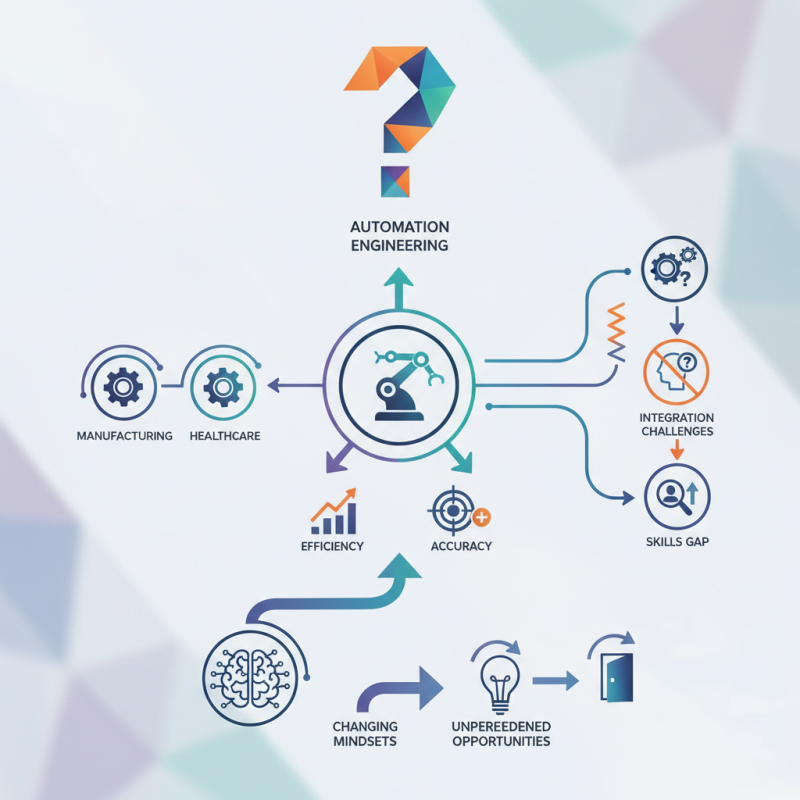
In the rapidly evolving landscape of industries, automation engineering stands as a pivotal force. According to Dr. Emily Carter, a leading expert in the field, "Automation engineering is reshaping how industries operate and thrive." This transformation is evident across manufacturing, healthcare, and logistics, where automation enhances efficiency and accuracy.
Despite its many advantages, challenges remain. Companies often face hurdles in integrating new technologies into existing systems. Resistance from employees is another obstacle. Furthermore, as automation develops, the need for skilled professionals grows. It highlights a gap that requires urgent attention and solutions.
Automation engineering is more than just technology; it’s about changing mindsets. Industries must adapt to keep pace. The future of work demands a workforce that embraces these changes while addressing the inherent difficulties. The journey toward automation is complex, yet it opens doors to unprecedented opportunities.
The Rise of Artificial Intelligence in Automation Engineering
The integration of artificial intelligence (AI) in automation engineering is reshaping industries worldwide. As industries increasingly adopt AI, an estimated 70% of companies expect to implement AI-driven automation in their operations within the next two years. This trend is particularly strong in manufacturing and logistics, where AI optimizes supply chain processes and production efficiency.
AI enhances predictive maintenance by analyzing data from machines. This reduces downtime and extends equipment lifespan. According to a recent industry report, companies utilizing AI in maintenance have seen a 30% decrease in operational costs. However, reliance on AI raises questions about data privacy and workforce displacement.
Tips: Evaluate your data security measures before adopting AI. Conduct a thorough risk assessment to identify potential vulnerabilities. Consider how AI may impact your employees’ roles. Training programs can help smooth the transition.
The rise of AI is not without challenges. Many businesses face difficulties in integration and employee adaptation. A study shows that only 40% of companies feel fully prepared for AI adoption. The learning curve can be steep, but addressing these concerns can foster a more seamless integration of automation technologies.
Top Automation Engineering Trends Transforming Industries Today
Integration of Internet of Things (IoT) in Industrial Processes
The integration of the Internet of Things (IoT) in industrial processes is reshaping how industries operate. According to a recent report from McKinsey, IoT could generate up to $6.2 trillion in economic value by 2025. This impact is visible in various sectors, from manufacturing to logistics. Real-time data collection helps improve efficiency. However, many companies face challenges in data management and security.
IoT devices, such as sensors and actuators, enhance process automation. These devices collect valuable data on equipment performance and operational conditions. For instance, predictive maintenance can reduce downtime by up to 30%. While this technology shows great promise, the initial investment and integration hurdles can be significant. Many organizations struggle to establish a clear IoT strategy, leading to underutilization of these tools.
The rise of IoT also raises questions about data privacy and cybersecurity. Vulnerabilities in IoT networks can expose sensitive information. The World Economic Forum warns that 60% of organizations lack adequate security measures. Thus, while IoT offers numerous benefits, industries must address these concerns adequately. Balancing innovation and security is crucial for long-term success in automation.
Robotic Process Automation: Revolutionizing Workforce Efficiency
Robotic Process Automation (RPA) is changing how industries operate. This technology takes over repetitive tasks. It boosts workforce efficiency significantly.
Employees can focus on high-value work. Automation helps reduce errors, saving time and resources. However, the shift can be challenging. Some workers may feel threatened by automation.
Adapting to new roles is essential.
Consider the impact on communication. Teams must collaborate differently with RPA tools. Employees need training to effectively use this technology. They may struggle initially, which can lead to frustration.
Balancing automation and human insight is critical. Not every task should be automated. Some processes require human judgment and creativity.
RPA is not a one-size-fits-all solution. Businesses must identify which tasks benefit the most from automation. Some processes may still need human intervention to perform optimally.
Regular assessments are necessary to maintain efficiency. Embracing automation is a journey, not a destination. This transformation demands ongoing reflection and adjustment.
Data Analytics and Machine Learning Enhancements in Automation
Data analytics and machine learning are revolutionizing automation engineering. These tools allow industries to process vast amounts of data in real time. This transformation leads to smarter decision-making and increased efficiency. However, the integration process isn’t always smooth. There are technical challenges and skill gaps that need addressing.
Machine learning algorithms can improve predictive maintenance. They analyze historical data to forecast equipment failures. This reduces downtime and saves costs. Yet, data quality is vital. Poor data can lead to incorrect predictions. Organizations must prioritize data cleaning and validation. It’s a continuous learning process.
Automation systems are becoming more adaptive. They learn from usage patterns and adjust to changing environments. While this offers great potential, it also raises concerns about reliance on machines. Human oversight is still crucial. Balancing automation and human intervention is a key challenge that many face.
Top Automation Engineering Trends Transforming Industries Today - Data Analytics and Machine Learning Enhancements in Automation
| Trend |
Description |
Impact on Industries |
Current Adoption Rate (%) |
Future Growth Projection (%) |
| Advanced Data Analytics |
Utilizing big data to drive informed decisions and optimize processes. |
Improved operational efficiency across manufacturing and logistics. |
65% |
85% |
| Machine Learning |
AI algorithms that improve from data input to enhance automation processes. |
Increased predictive maintenance and reduced downtime. |
70% |
90% |
| Robotic Process Automation (RPA) |
Automation of repetitive tasks using AI-powered bots. |
Cost reduction and enhancement of productivity in business processes. |
75% |
95% |
| Cloud Automation |
Streamlining cloud operations for greater efficiency and scalability. |
Flexible resource management and cost efficiencies. |
60% |
80% |
| Intelligent Automation |
Combining automation with AI for smarter decision-making. |
Enhanced customer experience and streamlined operations. |
55% |
75% |